

How to Hire Dedicated Developers in India for Your US Business: A Practical Guide
This guide explores how to Hire Dedicated Developers in India for Your US Business: A Practical Guide. Use it to clarify the work your team needs, the skills to assess, and the management arrangements that will support the hire.
Table of Contents
- Why Hire Dedicated Developers in India?
- Cost Comparison: US vs. India
- Which Developer Roles Can You Hire?
- Step-by-Step Hiring Process
- Dedicated Developers vs. Staff Augmentation: What’s the Difference?
- Overcoming Common Challenges
- Best Practices for Managing a Remote Indian Team
- Frequently Asked Questions
Why Hire Dedicated Developers in India?
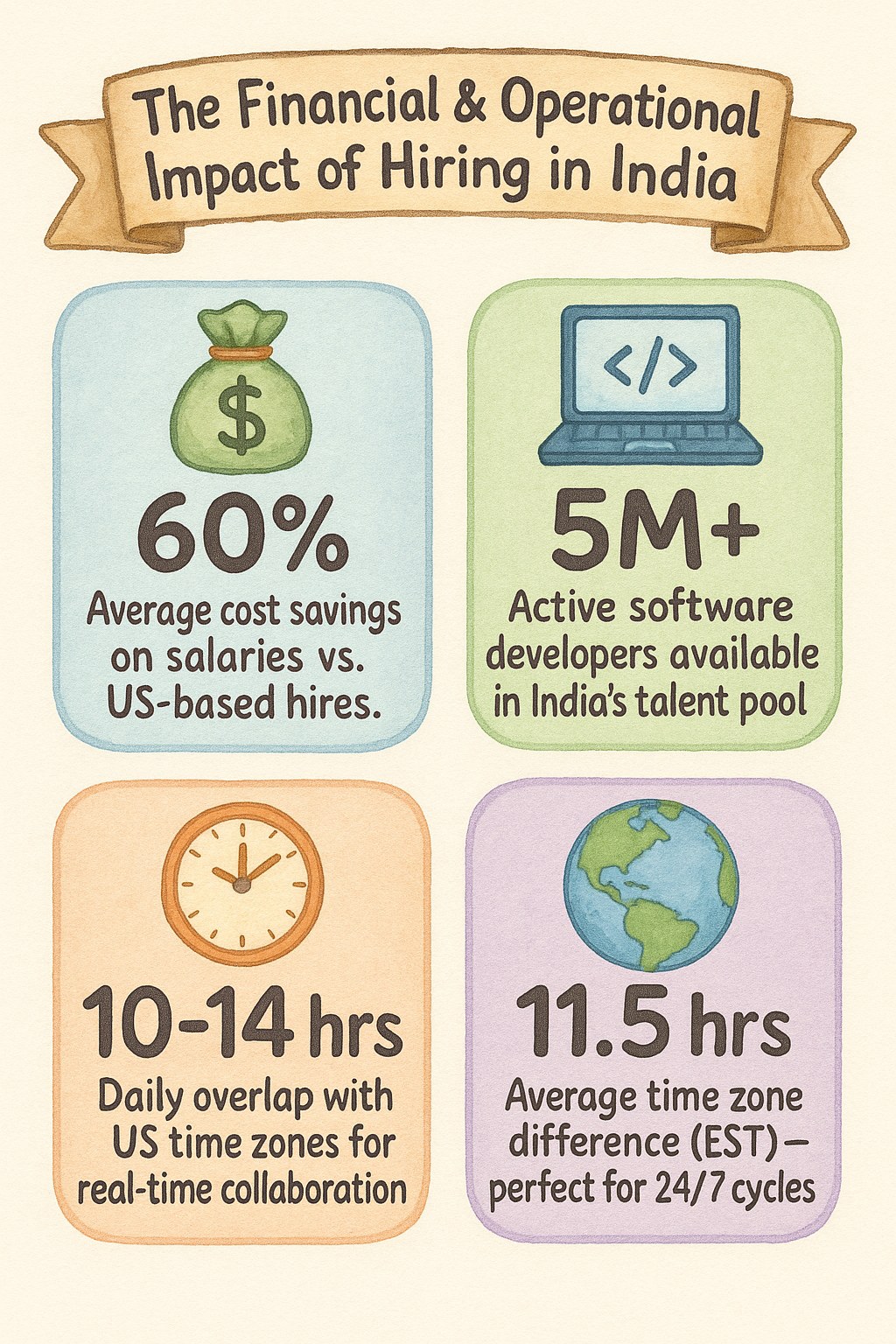
Moreover, India's time zone (IST) overlaps with US business hours for a significant portion of the day, especially for companies on the East Coast. This overlap facilitates real-time collaboration, which is crucial for agile development. With the right communication tools and processes, distance becomes a non-issue.
When you choose a dedicated remote model, you're not just hiring a contractor; you're building a team that works exclusively for your company. This ensures higher commitment, better alignment with your goals, and deeper knowledge of your product. Unlike freelancers who juggle multiple clients, dedicated developers are fully invested in your success.
Cost Comparison: US vs. India
One of the most compelling reasons to hire developers in India for US company projects is the significant cost advantage. Let's break down the numbers:
Beyond salary, you save on recruitment costs, onboarding, office space, and employee benefits. With a dedicated remote team, you don't need to worry about payroll taxes, insurance, or compliance—your staffing partner handles all that. This allows you to focus on core business activities while your offshore team handles development.
Which Developer Roles Can You Hire?
When you decide to hire dedicated developers in India, you can choose from a wide range of specializations. Companies typically hire for the following roles:
- Full-Stack Developers: Proficient in both front-end and back-end technologies, ideal for end-to-end product development.
- Front-End Developers: Experts in React, Angular, Vue.js, and responsive design.
- Back-End Developers: Skilled in Node.js, Python, Java, .NET, and database management.
- Mobile Developers: For iOS and Android apps using Swift, Kotlin, or React Native.
- E-commerce Developers: Specialized in Shopify, Magento, WooCommerce, and custom e-commerce solutions.
- DevOps Engineers: For CI/CD pipelines, cloud infrastructure, and automation.
- AI/ML Engineers: For machine learning models, data analytics, and AI-powered features.
When hiring, it's crucial to define the specific skills and experience level required. For example, if you're building a complex e-commerce platform, you might need a Shopify developer or a Magento developer. For enterprise solutions, consider Java developers or .NET developers. The right staffing partner will match you with candidates who have relevant industry experience.
Don't forget soft skills—communication, problem-solving, and teamwork are just as important as technical expertise. A dedicated developer who can communicate clearly in English and collaborate with your US-based team will be far more effective than a brilliant coder who struggles with time zones and language barriers.
Step-by-Step Hiring Process
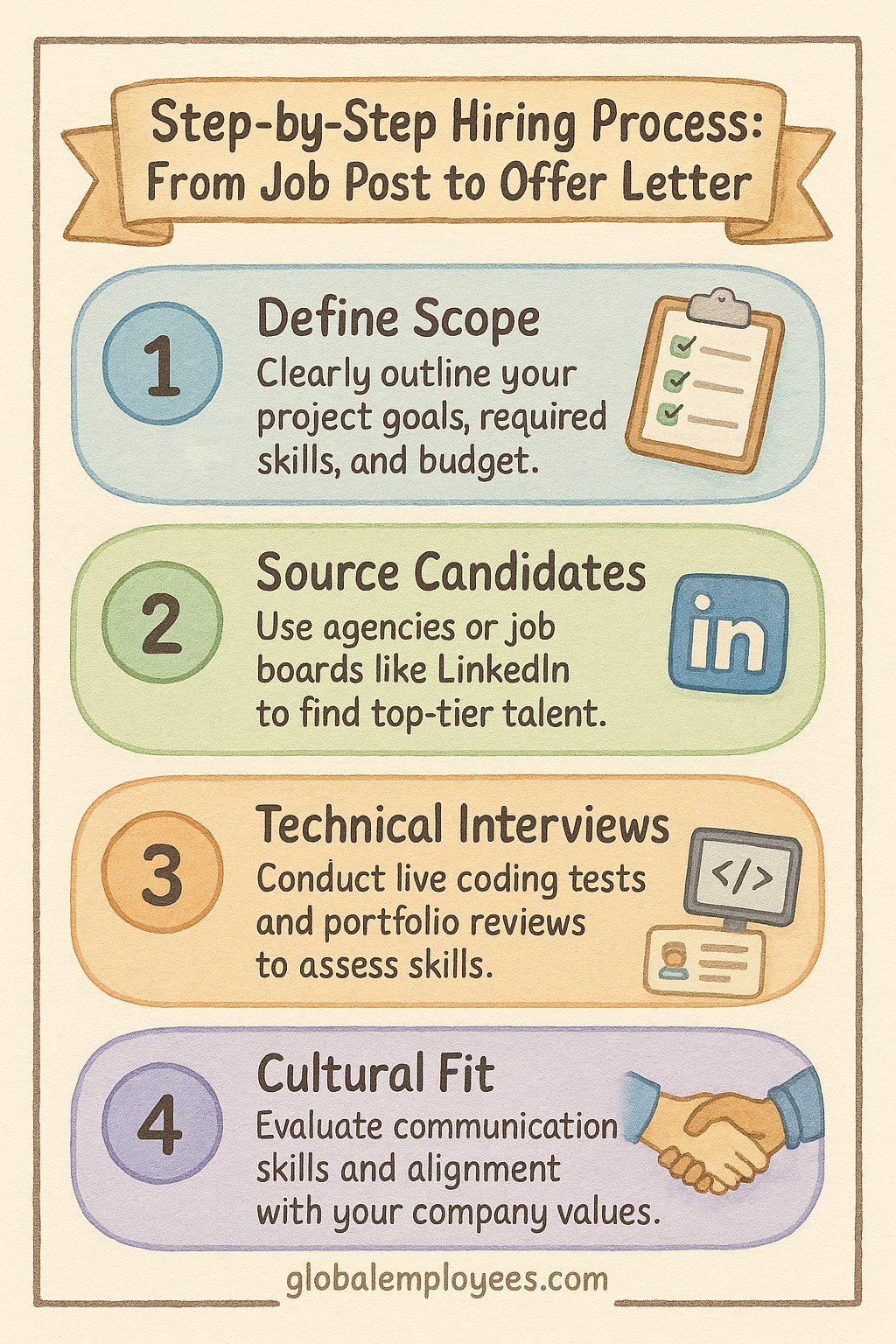
Hiring dedicated developers in India for your US business doesn't have to be complicated. By following a structured process, you can find the right talent quickly and efficiently. Here's a step-by-step guide:
1. Define Your Project Requirements
Before you start looking for candidates, clearly outline your project scope, technical stack, and timeline. Determine whether you need a full-time developer, part-time, or hourly. This clarity will help you communicate your needs to staffing agencies and evaluate candidates effectively.
2. Choose a Hiring Model
Decide between hiring directly (freelancers or internal HR) or using a dedicated staffing agency. For most US businesses, a dedicated remote staffing partner is the best choice because they handle recruitment, onboarding, and payroll. You can also explore staff augmentation if you need to fill specific skill gaps in your existing team.
5. Onboard and Integrate
Once you select a developer, the agency will handle the legalities and administrative tasks. You'll then onboard the developer into your team, setting up communication channels, project management tools, and daily stand-ups. A smooth onboarding process sets the tone for a productive relationship.
6. Monitor and Adjust
By following these steps, you can hire developers in India for US company projects with confidence. The key is to partner with a reliable agency that offers transparency and support throughout the process.
Dedicated Developers vs. Staff Augmentation: What’s the Difference?
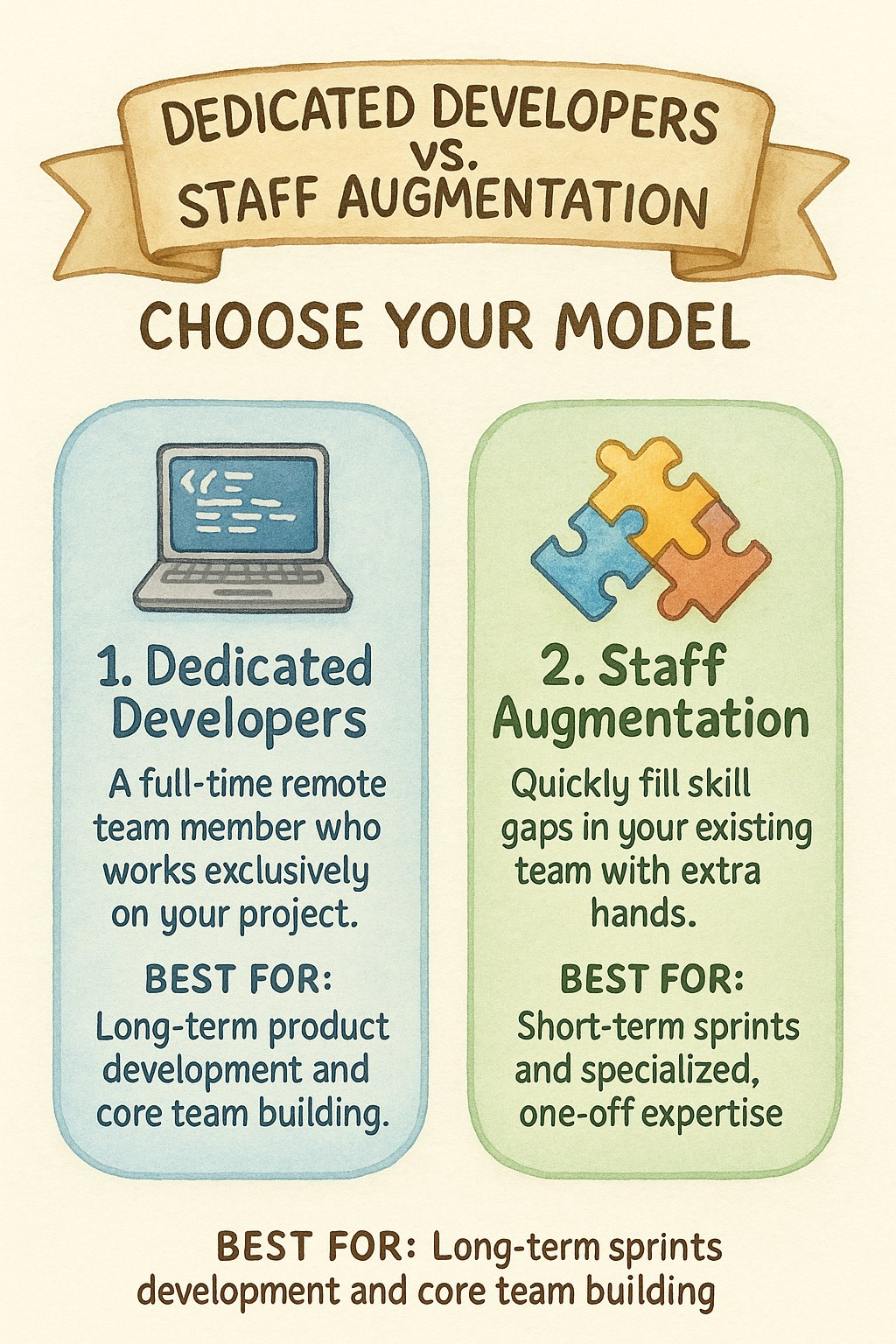
Many businesses use the terms "dedicated developers" and "staff augmentation" interchangeably, but they represent different models. Understanding the difference is crucial when deciding how to hire developers in India for US company needs.
Dedicated developers are full-time remote employees who work exclusively for your company. They are integrated into your team, follow your processes, and are managed by you. This model is ideal for long-term projects where you need a consistent, committed team. You can scale the team up or down as project requirements change, but each developer is dedicated solely to your work.
Staff augmentation is a flexible staffing model where you add external professionals to your existing in-house team for a specific period. This is useful for filling skill gaps or handling peak workloads. However, these professionals may not be fully dedicated to your project—they might work on multiple clients' projects simultaneously.
When choosing between the two, consider the duration and scope of your project. If you're building a new product from scratch, a dedicated team is likely the better choice. If you just need an extra pair of hands for a few months, staff augmentation might be more cost-effective. Both models offer significant cost savings compared to hiring in the US.
It's also worth noting that dedicated developers tend to have a deeper understanding of your business and product, leading to higher quality output and better collaboration. They are more invested in your success because their job depends on it. Staff augmentation, while flexible, may require more oversight to ensure alignment.
Overcoming Common Challenges
Hiring dedicated developers in India comes with its own set of challenges, but these are manageable with the right strategies. Here are common issues and how to overcome them:
Time Zone Differences
While India's time zone overlaps with US hours, there is still a gap, especially for West Coast companies. To overcome this, establish overlapping working hours for daily stand-ups and critical meetings. Use asynchronous communication tools like Slack and project management platforms to keep everyone on the same page.
Quality Assurance
Maintaining high code quality is a common concern. Implement robust code review processes, automated testing, and continuous integration. Many dedicated developers in India are well-versed in these practices. You can also request a trial period to evaluate their work before committing long-term.
Cultural Differences
By proactively addressing these challenges, you can ensure a smooth collaboration. Remember, the key is to treat your dedicated developers as an integral part of your team, not just outsourced resources. This mindset fosters trust and productivity.
Best Practices for Managing a Remote Indian Team
Once you've hired dedicated developers in India, effective management is essential for success. Here are best practices to get the most out of your remote team:
- Set Clear Expectations: Define roles, responsibilities, and deliverables from day one. Use project management tools like Jira or Trello to track progress.
- Communicate Regularly: Schedule daily stand-ups or weekly meetings to discuss progress, blockers, and next steps. Use video calls to build rapport.
- Provide Feedback: Offer constructive feedback regularly, both positive and negative. This helps developers improve and feel valued.
- Invest in Team Building: Organize virtual team-building activities to foster a sense of belonging. Celebrate milestones and achievements.
- Use the Right Tools: Invest in collaboration tools like Slack, Zoom, GitHub, and cloud-based IDEs. Ensure everyone has access to the necessary resources.
Another critical aspect is to align your team with your company's vision. Share your business goals and product roadmap so developers understand the bigger picture. This increases their motivation and commitment.
It's also important to respect their time zones. While overlap is essential, don't expect them to work during odd hours consistently. Instead, create a schedule that suits both parties. Many US companies find that having a few hours of overlap in the morning (EST) is sufficient for collaboration.
Finally, consider offering growth opportunities. Dedicated developers in India often value career development. You can provide training, certifications, or the chance to work on challenging projects. This reduces turnover and builds a loyal, long-term team.
Frequently Asked Questions
What is the difference between hiring a freelancer and a dedicated developer?
A freelancer works on a project basis and may have multiple clients, while a dedicated developer works exclusively for your company on a full-time basis. Dedicated developers are more integrated into your team and offer higher commitment and consistency.
What time zone overlaps are typical for US-India teams?
India Standard Time (IST) is 9.5 hours ahead of Eastern Time (EST) and 12.5 hours ahead of Pacific Time (PST). Typical overlap is 2-4 hours in the morning (EST) and 1-2 hours in the afternoon, which is sufficient for daily stand-ups and collaboration.
How this fits client-managed staffing
GlobalEmployees sources candidates for the requirements your team defines. You interview candidates, decide who to bring onboard, and manage their daily work. We handle payroll and HR administration. This arrangement is designed for companies with the managers and processes to direct their people. It does not transfer project delivery or day-to-day supervision to us.
Define the role around actual responsibilities, the tools the employee will use, and the decisions they can make. Include the reporting line, working arrangements, and how your team will review the work. Discuss the fee and any additional support requirements for your particular brief instead of assuming a fixed package applies to every hire.
If the employee is not the right fit, you can request a replacement during the first two weeks after joining. Raise concerns early with specific examples so that expectations and next steps can be discussed.
Include practical AI requirements
Describe where AI assistance would be useful in this workflow and which tools your organization approves. Ask candidates to demonstrate a relevant task, explain what they verified, and show how they handle an incorrect or incomplete output. Familiarity with a tool should be assessed alongside the underlying professional skills the job requires.
Decide what information may be used with those tools, which outputs require human review, and how work will be documented. GlobalEmployees can source for the AI experience in your brief; your team interviews candidates and evaluates whether their ability meets the requirement. Keep the assessment grounded in your actual work rather than a generic claim of AI expertise.
Questions to resolve before you start
- What outcome does the business need, and what recurring work will the person own?
- Which skills are essential now, and which can be learned after joining?
- Who will interview, select, supervise, and review the employee's work?
- What systems, documentation, and approved AI tools will be available?
- How will you assess quality and discuss concerns during the first two weeks?
Use these answers to align the people involved in hiring. A clear brief makes the search and interviews more focused, and it gives the employee a practical starting point after joining.
Tell us about your hiring requirements or explore dedicated IT and non-IT roles.
Need to hire dedicated remote talent?
Tell us the role, experience, and AI skills your team needs.
Hire Talent Now