

How Much Does It Cost to Hire a Virtual Assistant? Budget Planning Guide
Compare hiring options by responsibilities, experience, management needs, and the services included in each proposal. Build a budget for your specific requirement rather than relying on a headline rate.
Build a budget around the actual scope
Start by defining the responsibilities, required experience, and working arrangement. A specialist maintaining a mature system may need different experience from someone handling a narrow, well-documented task. The budget should reflect those differences rather than a single headline rate attached to a job title.
Compare written proposals covering the same work and period. Identify the staffing fee or compensation, any separately charged services, equipment and software requirements, onboarding effort, and the management time your team will provide. Ask what is included, what is optional, and how a change in responsibilities would affect the arrangement.
For a project or hourly proposal, state the assumed volume of work and how changes are handled. For ongoing dedicated staffing, describe the recurring workload and the manager who will direct it. Avoid treating an hourly quotation, a base salary, and an inclusive staffing proposal as equivalent numbers without reconciling their scope.
GlobalEmployees will discuss pricing for your requirements. Previous indicative figures in this article have been removed because they should not be treated as a current quote. Request a proposal based on the role, seniority, and practical arrangements you actually need.
Table of Contents
- Why Virtual Assistant Pricing Matters in 2026
- Hourly Rates vs. Monthly Dedicated Models
- Key Factors That Affect Virtual Assistant Cost
- Cost Comparison: Freelance vs. Agency vs. Dedicated Remote
- Hidden Costs to Watch Out For
- How to Reduce Your Virtual Assistant Costs
- Frequently Asked Questions
Hourly Rates vs. Monthly Dedicated Models
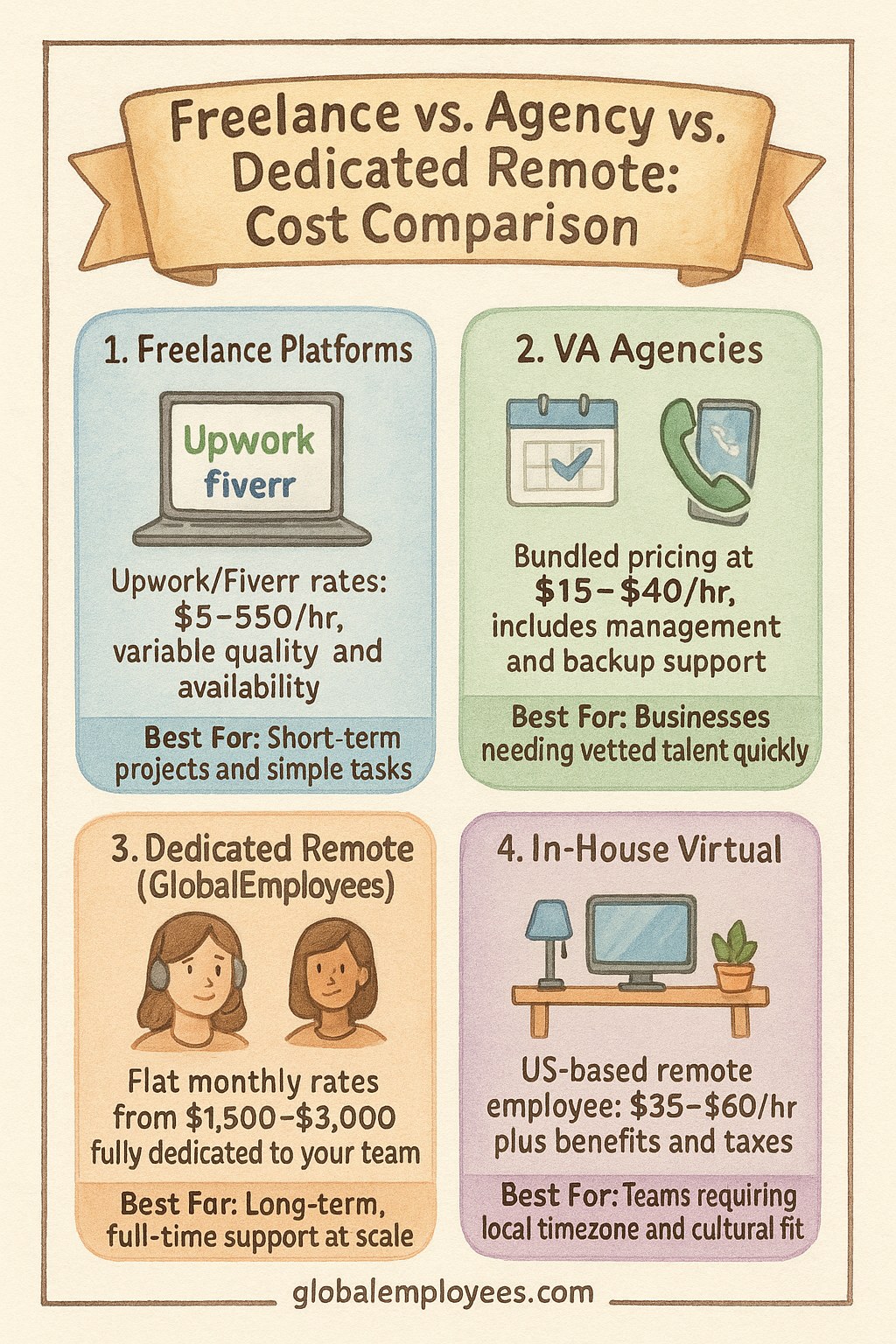
When you start researching virtual assistant costs, you'll encounter two primary pricing structures: hourly rates and monthly dedicated retainers. Each has its pros and cons, and the right choice depends on your workload and budget.
Key Factors That Affect Virtual Assistant Cost
Several variables influence how much you'll pay for a virtual assistant. Understanding these will help you budget accurately and avoid surprises.
- Experience and Skill Level: Entry-level VAs cost less, but they require more training. Experienced VAs (e.g., with project management or technical skills) command higher rates.
- Specialization: General admin VAs are cheaper, while specialized VAs—like SEO experts or graphic designers—cost more due to their niche skills.
- Engagement Type: Freelance hourly rates differ from dedicated monthly retainers. Agencies typically offer bundled services at a fixed monthly price.
- Time Zone Overlap: If you need a VA to work in your time zone, you may pay a premium. Offshore VAs often work flexible hours to match your schedule.
Additionally, the complexity of tasks matters. A VA who handles simple data entry will cost less than one who manages your calendar, email, and social media. For example, a data entry operator is among the most affordable roles, while a DevOps engineer is at the higher end of the pricing spectrum.
Cost Comparison: Freelance vs. Agency vs. Dedicated Remote
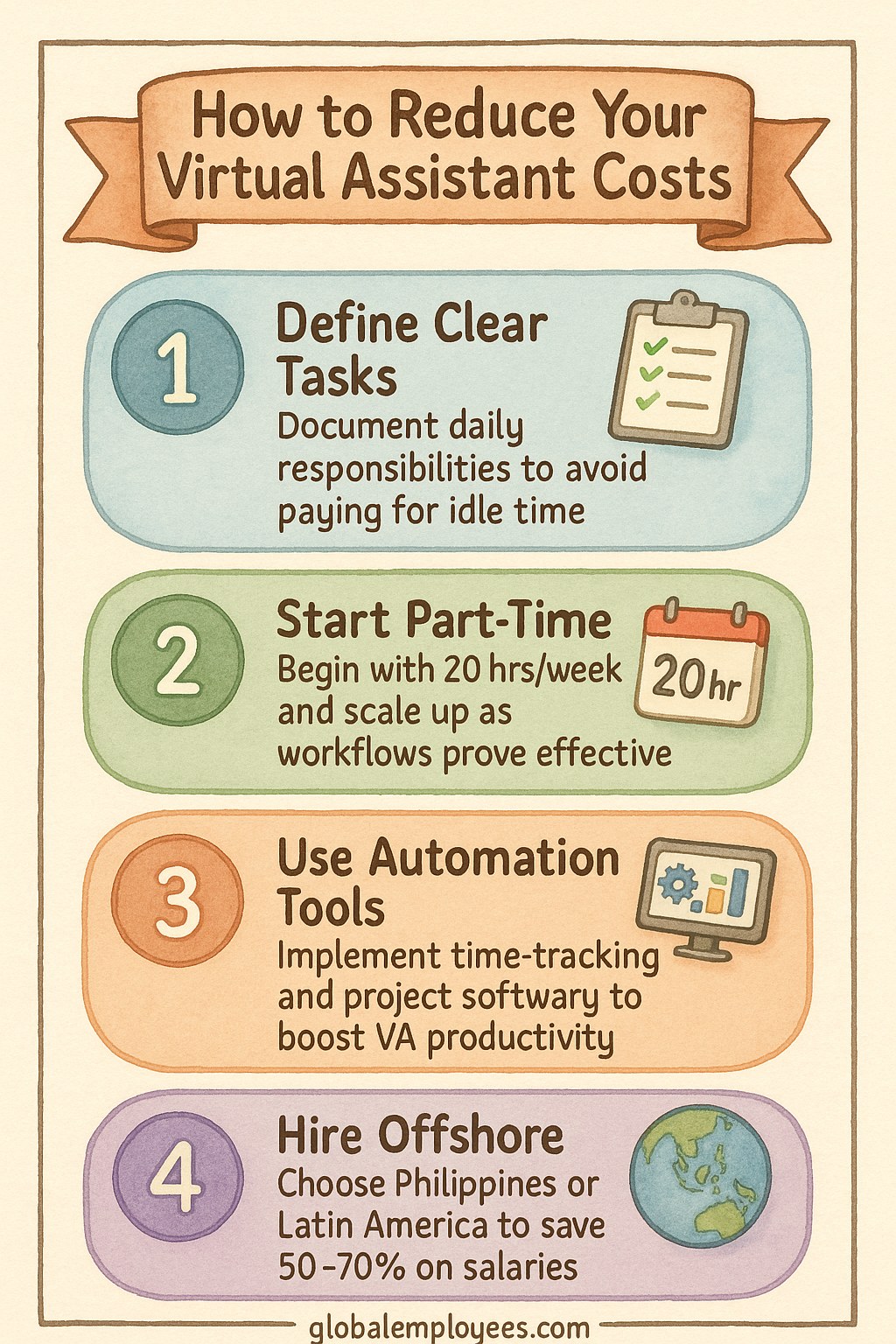
To help you visualize the differences, here's a comparison of three common hiring routes for a virtual assistant in 2026:
1. Freelance Platforms (e.g., Upwork, Fiverr)
- Pros: Flexible, no long-term commitment
- Cons: Quality varies, you manage everything, platform fees add up
2. Traditional Staffing Agencies (U.S./UK based)
- Pros: High-quality, vetted talent
- Cons: Expensive, often requires long-term contracts
- Cons: Requires a brief onboarding period
Hidden Costs to Watch Out For
When budgeting for a virtual assistant, many businesses overlook hidden costs that can inflate the final bill. Here are common ones to avoid:
- Management Time: Freelancers require constant supervision. With a dedicated VA, they become part of your team, requiring less micromanagement.
- Turnover Costs: High turnover rates on freelance platforms mean you'll repeatedly spend time onboarding new VAs. Dedicated staffing reduces this churn.
Another hidden cost is the cost of mistakes. An inexperienced VA might make errors that cost you clients. Investing in a professional VA from a reputable agency like offshore staffing provider minimizes this risk.
How to Reduce Your Virtual Assistant Costs
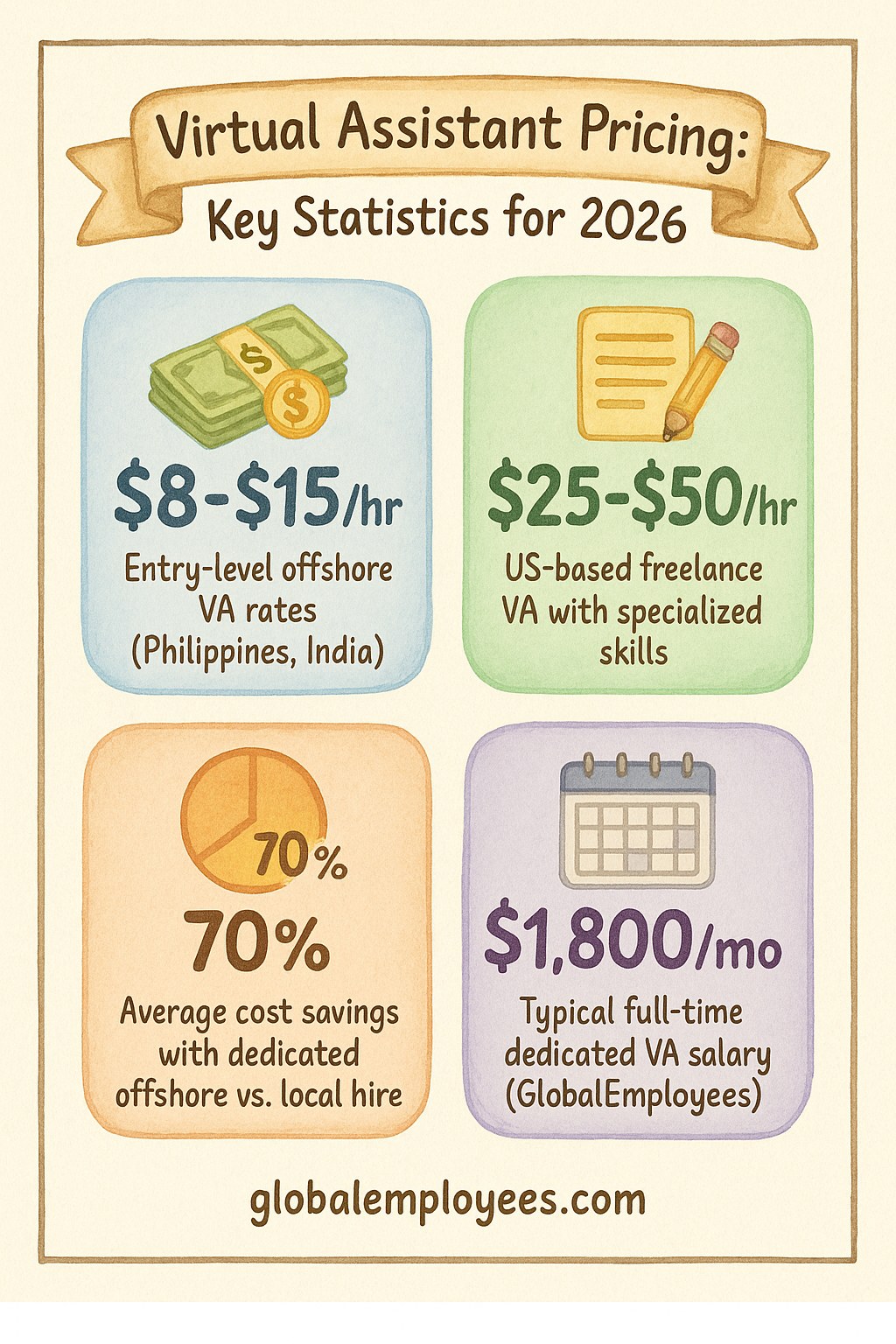
You don't have to sacrifice quality to save money. Here are proven strategies to lower your virtual assistant expenses without compromising on output.
- Define Clear Job Responsibilities: A well-defined role ensures you don't overpay for a VA with skills you don't need. For example, if you only need admin support, don't hire a specialized AI/ML engineer.
- Leverage Time Zone Differences: Offshore VAs can work while you sleep, ensuring 24/7 productivity. This can reduce the need for multiple hires.
Additionally, consider hiring a multi-skilled VA who can handle both administrative and marketing tasks. For instance, a VA with digital marketing skills can cover your social media and email campaigns, eliminating the need for a separate hire.
Frequently Asked Questions
What is the difference between a virtual assistant and a dedicated remote employee?
A virtual assistant is often a freelancer working for multiple clients, while a dedicated remote employee works exclusively for your business, usually through a staffing agency. Dedicated remote employees offer more stability and integration into your team.
How can I lower the cost of hiring a virtual assistant?
You can lower costs by hiring from offshore locations, using a dedicated staffing agency, defining clear job roles, and starting with a trial period. These strategies help you avoid hidden fees and ensure you get the best value.
What tasks can a virtual assistant handle?
Virtual assistants can handle a wide range of tasks, including email management, scheduling, data entry, customer support, social media management, and even technical tasks like website maintenance. Specialized VAs can also provide services like SEO or graphic design.
How this fits client-managed staffing
GlobalEmployees sources candidates for the requirements your team defines. You interview candidates, decide who to bring onboard, and manage their daily work. We handle payroll and HR administration. This arrangement is designed for companies with the managers and processes to direct their people. It does not transfer project delivery or day-to-day supervision to us.
Define the role around actual responsibilities, the tools the employee will use, and the decisions they can make. Include the reporting line, working arrangements, and how your team will review the work. Discuss the fee and any additional support requirements for your particular brief instead of assuming a fixed package applies to every hire.
If the employee is not the right fit, you can request a replacement during the first two weeks after joining. Raise concerns early with specific examples so that expectations and next steps can be discussed.
Include practical AI requirements
Describe where AI assistance would be useful in this workflow and which tools your organization approves. Ask candidates to demonstrate a relevant task, explain what they verified, and show how they handle an incorrect or incomplete output. Familiarity with a tool should be assessed alongside the underlying professional skills the job requires.
Decide what information may be used with those tools, which outputs require human review, and how work will be documented. GlobalEmployees can source for the AI experience in your brief; your team interviews candidates and evaluates whether their ability meets the requirement. Keep the assessment grounded in your actual work rather than a generic claim of AI expertise.
Questions to resolve before you start
- What outcome does the business need, and what recurring work will the person own?
- Which skills are essential now, and which can be learned after joining?
- Who will interview, select, supervise, and review the employee's work?
- What systems, documentation, and approved AI tools will be available?
- How will you assess quality and discuss concerns during the first two weeks?
Use these answers to align the people involved in hiring. A clear brief makes the search and interviews more focused, and it gives the employee a practical starting point after joining.
Tell us about your hiring requirements or explore dedicated IT and non-IT roles.
Need to hire dedicated remote talent?
Tell us the role, experience, and AI skills your team needs.
Hire Talent Now