

10 Signs Your Business Is Ready to Hire a Dedicated Remote Team
This guide explores 10 Signs Your Business Is Ready to Hire a Dedicated Remote Team. Use it to clarify the work your team needs, the skills to assess, and the management arrangements that will support the hire.
Table of Contents
- Sign 1: You’re Turning Down Projects Due to Capacity
- Sign 2: Your Hiring Cycle Is Too Slow
- Sign 3: You’re Spending Too Much on Recruitment and Overhead
- Sign 4: Your Core Team Is Burnt Out
- Sign 5: You Need Specialized Skills You Can’t Find Locally
- Sign 6: You’re Ready to Enter New Time Zones
- Sign 7: Your Projects Are Becoming Recurring, Not One-Off
- Sign 8: You Want to Scale Without Losing Agility
- Sign 9: Your Competitors Are Already Using Offshore Staff
- Sign 10: You Have a Clear Onboarding Process
- Frequently Asked Questions
Sign 1: You’re Turning Down Projects Due to Capacity
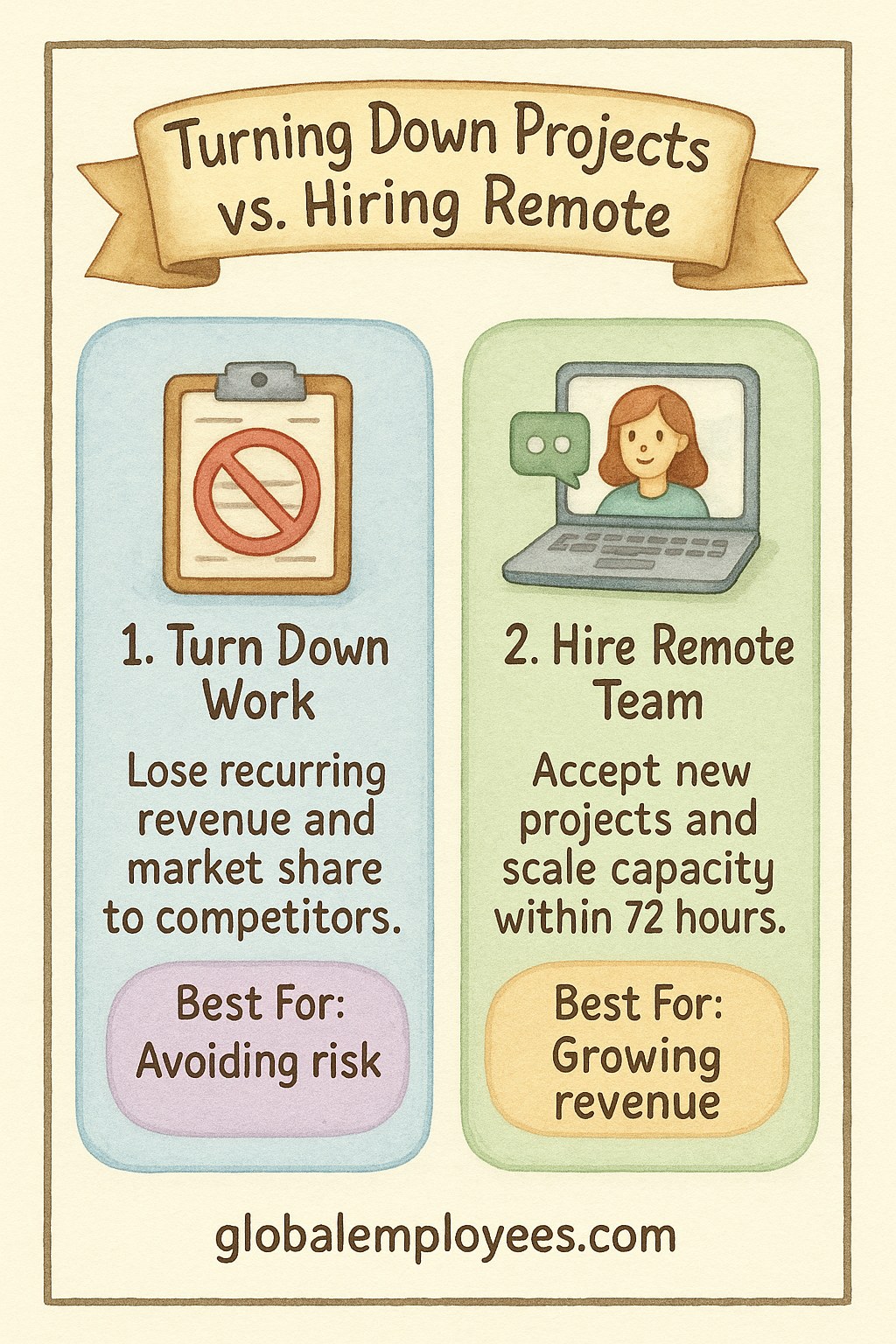
If you find yourself apologizing to potential clients because you simply don’t have the bandwidth to take on new work, that’s a glaring sign. It means your current team is at full capacity, and every new project is a missed revenue opportunity. Many growing businesses assume they need to hire locally, but the cost and time involved often delay action. This is where a dedicated remote team becomes a game-changer.
Turning down projects is not just about lost revenue—it also damages your reputation. Clients remember when you couldn’t serve them, and they may not return. By proactively building a remote team, you signal to the market that you’re ready for growth. If you’re routinely saying “no” to new business, it’s time to consider dedicated offshore team solutions.
Sign 2: Your Hiring Cycle Is Too Slow
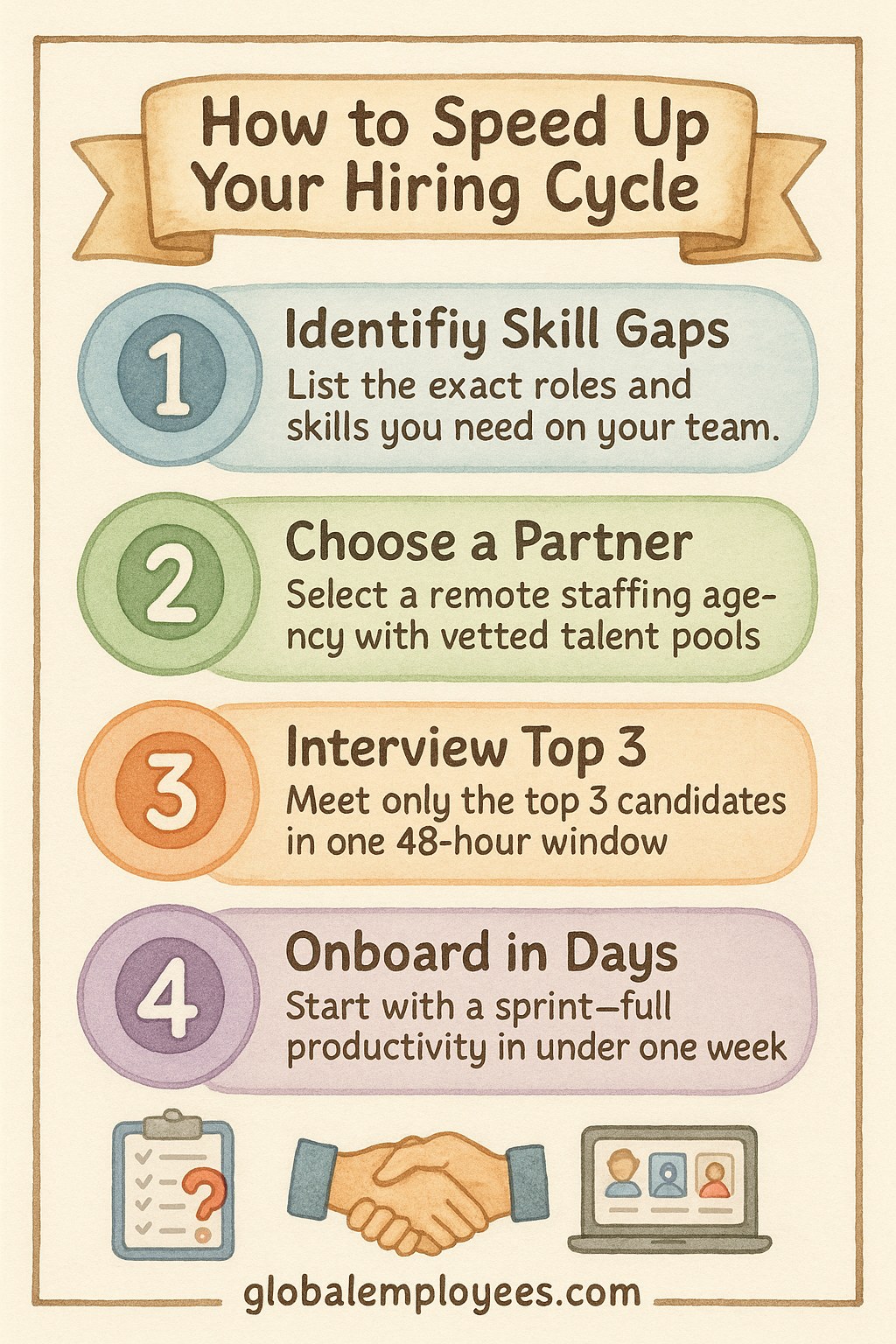
Moreover, the quality of candidates is not compromised. Remote staffing agencies pre-screen for skills, experience, and communication abilities. You get access to a talent pool that’s ready to contribute from day one. If you’ve ever lost a great candidate because your hiring process dragged on, you know the pain. Switching to a dedicated remote model eliminates that pain.
Sign 3: You’re Spending Too Much on Recruitment and Overhead
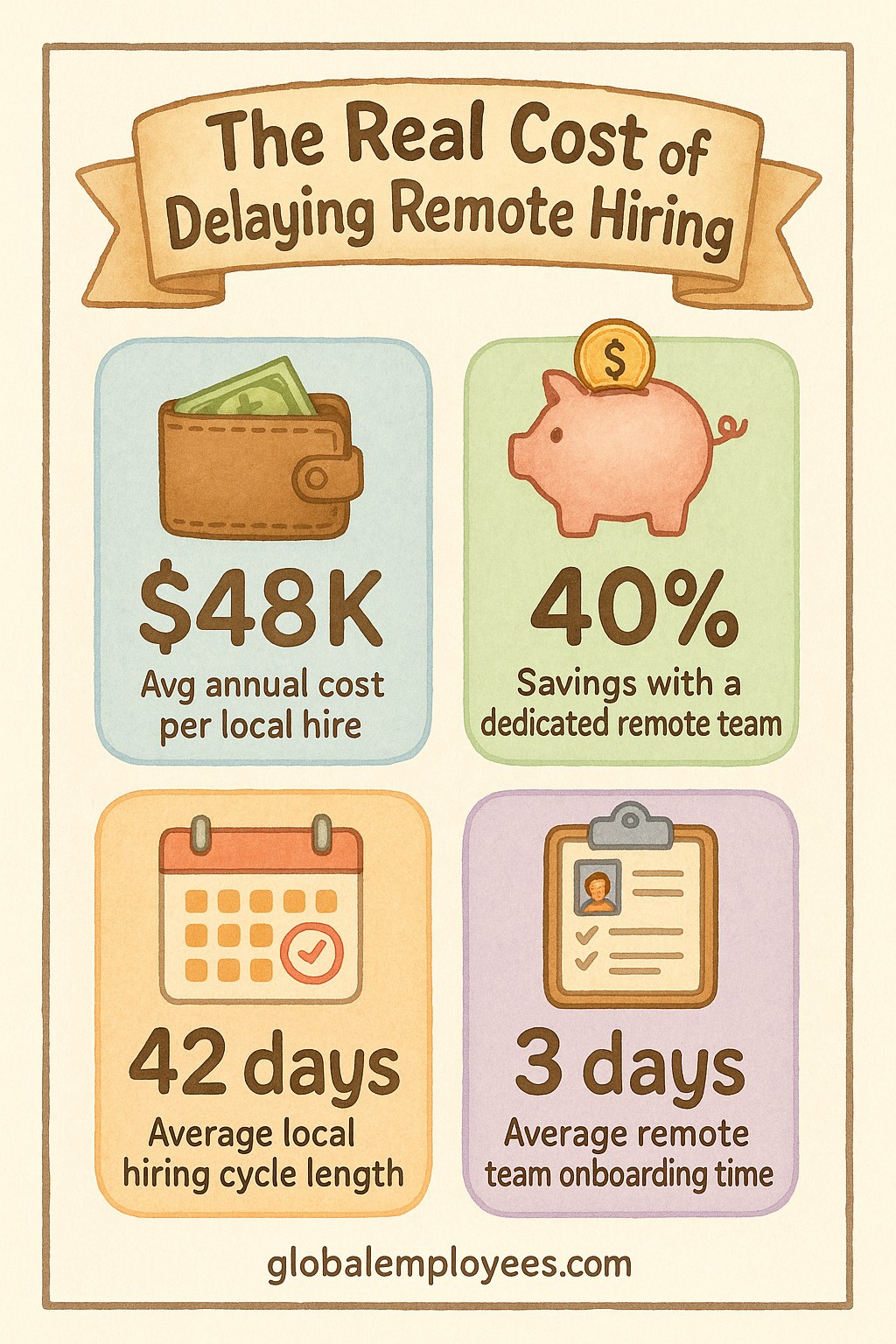
Recruiting is expensive. Between job board fees, recruiter commissions, and the time your managers spend interviewing, the costs add up. Plus, local hires come with overhead—office space, equipment, benefits, and taxes. If your current staffing strategy is eating into your profit margins, it’s a clear sign that you need a more cost-effective approach.
If you’re spending more than you should on recruitment and overhead, it’s time to switch to offshore staffing. You can reinvest those savings into marketing, product development, or other growth initiatives.
Sign 4: Your Core Team Is Burnt Out
When your key employees are constantly working overtime, missing deadlines, or showing signs of stress, your business is at risk. Burnout leads to reduced productivity, higher turnover, and poor work quality. If you notice your team is stretched too thin, it’s a sign that you need additional support—and a dedicated remote team can provide that relief.
Remote staff can take over repetitive tasks, allowing your core team to focus on high-impact work. For instance, a marketing manager might spend hours on data entry or social media scheduling. By hiring a remote virtual assistant, you free up that manager to strategize and grow your campaigns. This not only improves morale but also boosts overall efficiency.
Burnout is a common reason employees leave. The cost of replacing a highly skilled employee is substantial. By proactively adding remote support, you show your team that you value their well-being and are committed to sustainable growth. This can increase retention and loyalty.
If your team is constantly complaining about workload, listen to them. They are your early warning system. A dedicated remote team can be the solution that prevents a mass exodus. Consider hiring employees in India to share the load and keep your best talent happy.
Sign 5: You Need Specialized Skills You Can’t Find Locally
Sometimes the talent you need is not available in your local market. Whether it’s a niche programming language, a specific digital marketing skill, or an experienced Salesforce developer, searching locally can be fruitless. If you’ve spent months looking for a specialist without success, it’s time to expand your search globally.
Moreover, remote specialists often bring fresh perspectives and innovative approaches that can benefit your projects. They may have worked with international clients and understand global best practices. This diversity can be a competitive advantage.
If you’re tired of compromising on skills or settling for “good enough,” it’s time to hire dedicated remote staff. You can find the perfect fit for your project, whether it’s a AI/ML engineer or a DevOps engineer, without the geographic constraints.
Sign 6: You’re Ready to Enter New Time Zones
If your business is expanding globally or you want to provide 24/7 support to customers, a dedicated remote team in different time zones is a strategic advantage. For example, a US-based company can hire remote staff in India to cover the night shift, ensuring that customer queries are answered promptly. This round-the-clock coverage can significantly improve customer satisfaction.
Time zone differences can also accelerate your development cycles. While your US team sleeps, your offshore team can work on features, and you wake up to a completed project. This “follow the sun” model is used by many successful tech companies. If you’re ready to operate on a global scale, remote staffing is the way to go.
If you’ve been limited by your local time zone, consider the possibilities of a dedicated offshore team. You can extend your business hours without asking your local employees to work overnight. This is a sign that you’re ready for remote staff.
Sign 7: Your Projects Are Becoming Recurring, Not One-Off
When you start getting repeat business or long-term projects, it’s a sign that you need a stable, dedicated team rather than hiring freelancers for each gig. Freelancers are great for one-off tasks, but they may not be available when you need them again. A dedicated remote team provides continuity and reliability.
For example, if you’re an e-commerce business that needs ongoing website maintenance, a dedicated e-commerce developer is more efficient than hiring a different freelancer every time. They become familiar with your codebase, your brand, and your customers, leading to better results. This is why many businesses choose dedicated remote staffing over project-based outsourcing.
Recurring projects also justify the investment in a full-time remote employee. With monthly pricing, you can budget accurately and avoid the uncertainty of hourly rates. Plus, you build a long-term relationship with your remote team, which improves collaboration and trust.
If you find yourself rehiring the same freelancers repeatedly, it’s time to formalize the arrangement with a dedicated remote team. This ensures you have the resources you need when you need them, without the hassle of searching for new talent each time.
Sign 8: You Want to Scale Without Losing Agility
Scaling a business often comes with bureaucratic overhead—more layers of management, slower decision-making, and increased costs. But with a dedicated remote team, you can scale quickly and remain agile. You can add or reduce team members based on project demands, without the long-term commitment of local hires.
Agility is the key to staying competitive. If you’re missing opportunities because you can’t ramp up quickly, it’s a sign you need a flexible staffing solution. A dedicated remote team gives you that edge.
Sign 9: Your Competitors Are Already Using Offshore Staff
If you notice that your competitors are offering faster turnarounds, lower prices, or better service, they might be using offshore staff. Offshore staffing has become a standard practice for businesses of all sizes. If you’re not leveraging this strategy, you’re at a competitive disadvantage.
For example, many software development companies hire offshore developers to reduce costs and speed up delivery. If your competitor can deliver a project in half the time because they have a larger team, you’ll lose clients. Ignoring offshore staffing is like ignoring the internet—it’s here to stay.
If you see your competitors succeeding with remote teams, don’t wait. Explore staff augmentation to enhance your existing team with offshore talent. This is a clear sign that your business is ready for a dedicated remote team.
Sign 10: You Have a Clear Onboarding Process
Hiring a remote team is only successful if you can integrate them into your workflow. If you have a well-documented onboarding process, you’re ready to bring on remote staff. This includes having clear job descriptions, communication protocols, and project management systems in place.
If you don’t have an onboarding process, that’s not a reason to avoid remote hiring—it’s a reason to develop one. Start by creating standard operating procedures for your core tasks. Then, when you hire a remote team member, they can quickly get up to speed.
Having a clear onboarding process also reduces the learning curve and ensures that your remote staff is productive from day one. If you check this box, you’re definitely ready to hire a dedicated remote team. You can even use hire developers in India with confidence.
Frequently Asked Questions
How do I know if my business is ready for remote staff?
You’re ready for remote staff if you have consistent project work, a need for specialized skills, or a desire to reduce costs. If your current team is overloaded or you’re turning down work, it’s a clear sign. Additionally, if you have clear processes and can manage a remote team, you’re ready to hire.
How this fits client-managed staffing
GlobalEmployees sources candidates for the requirements your team defines. You interview candidates, decide who to bring onboard, and manage their daily work. We handle payroll and HR administration. This arrangement is designed for companies with the managers and processes to direct their people. It does not transfer project delivery or day-to-day supervision to us.
Define the role around actual responsibilities, the tools the employee will use, and the decisions they can make. Include the reporting line, working arrangements, and how your team will review the work. Discuss the fee and any additional support requirements for your particular brief instead of assuming a fixed package applies to every hire.
If the employee is not the right fit, you can request a replacement during the first two weeks after joining. Raise concerns early with specific examples so that expectations and next steps can be discussed.
Include practical AI requirements
Describe where AI assistance would be useful in this workflow and which tools your organization approves. Ask candidates to demonstrate a relevant task, explain what they verified, and show how they handle an incorrect or incomplete output. Familiarity with a tool should be assessed alongside the underlying professional skills the job requires.
Decide what information may be used with those tools, which outputs require human review, and how work will be documented. GlobalEmployees can source for the AI experience in your brief; your team interviews candidates and evaluates whether their ability meets the requirement. Keep the assessment grounded in your actual work rather than a generic claim of AI expertise.
Questions to resolve before you start
- What outcome does the business need, and what recurring work will the person own?
- Which skills are essential now, and which can be learned after joining?
- Who will interview, select, supervise, and review the employee's work?
- What systems, documentation, and approved AI tools will be available?
- How will you assess quality and discuss concerns during the first two weeks?
Use these answers to align the people involved in hiring. A clear brief makes the search and interviews more focused, and it gives the employee a practical starting point after joining.
Tell us about your hiring requirements or explore dedicated IT and non-IT roles.
Need to hire dedicated remote talent?
Tell us the role, experience, and AI skills your team needs.
Hire Talent Now