Hiring Full-Stack Developer: What It Means and Costs
If you're hiring full-stack developer talent for the first time, you've probably noticed the job title means something different at every company you check out. One listing wants someone who lives in React and Node.js, another expects Python and AWS, and a third throws in DevOps and mobile work too. That confusion makes it hard to write a job post, screen candidates, or even know what a fair salary looks like.
This article breaks down exactly what a full-stack developer does, the core skills you should expect at junior, mid, and senior levels, and what hiring actually costs whether you go local, freelance, or offshore. You'll see real rate ranges instead of vague estimates, so you can budget with confidence before you post a single job listing.
We'll also cover where to look, from Charlotte-based talent pools to remote platforms, and why many growing companies now build a full-time team that works exclusively for them instead of competing for scarce local candidates. By the end, you'll know exactly what you're paying for and how to avoid overpaying for the wrong fit.
Why hiring a full-stack developer matters for your business
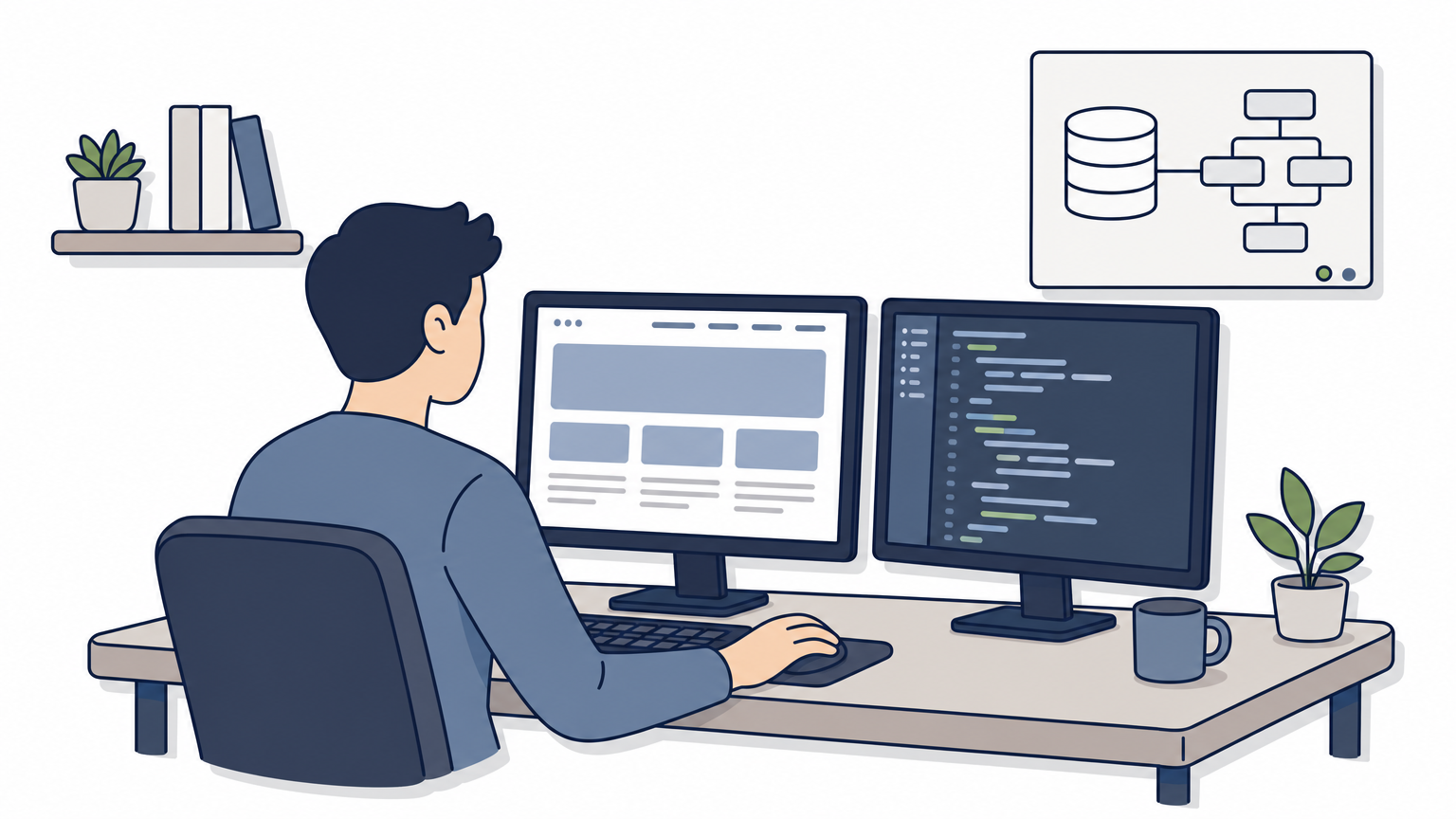
Business owners often treat this hire like any other technical role, but the decision to bring on a full-stack developer changes how your entire product gets built. A full-stack developer works across the front end (what users see and click) and the back end (databases, servers, and application logic), which means one person can carry a feature from design mockup to live deployment. For a small business or an early-stage startup, that range matters more than it sounds. You're not just filling a seat, you're deciding whether your team can move fast without hiring five specialists first.
One hire, multiple roles covered
Small teams rarely have the budget to hire a dedicated front-end engineer, a back-end engineer, a database admin, and a DevOps person separately. A skilled full-stack developer covers enough of that ground to keep a product moving. Think about a typical e-commerce feature request, like adding a customer loyalty dashboard. A full-stack developer can build the interface, wire up the API, and connect it to your database without waiting on three different specialists to sync their calendars. That's the practical reason so many founders start their hiring full-stack developer search before they consider anyone else.
A full-stack developer buys you speed, because one person can carry a feature from idea to production without four handoffs in between.
Faster time to market
Every handoff between team members adds delay. A front-end developer finishes their piece, waits for the back-end developer to expose an API, then loops back when something doesn't match. Full-stack developers cut that friction because they hold the whole picture in their head. This matters most when you're racing a competitor to launch a feature or responding to a client deadline. Teams that rely entirely on narrow specialists often lose days to coordination that a single full-stack hire would have avoided.
Lower overhead for lean teams
Salary is only part of the cost of a new hire. Every additional employee adds management overhead, more Slack channels to monitor, more one-on-ones to schedule, more code review queues to manage. A lean team built around full-stack developers keeps that overhead down because fewer people need coordinating for the same output. This is especially relevant if you're a founder or a non-technical manager without a large engineering department to lean on.
Full-stack vs. specialist team: a quick comparison
The table below shows how the two approaches typically compare for a small to mid-sized project. Numbers assume a US-based team; offshore rates run lower across the board, which we'll cover later in this article.
| Factor | Full-stack developer(s) | Specialist team (front end + back end + DevOps) |
|---|---|---|
| Headcount needed | 1-2 for most small products | 3-5 minimum |
| Coordination overhead | Low | Higher, more handoffs |
| Speed on small features | Fast | Slower, depends on scheduling |
| Depth on complex, large-scale systems | Moderate | Higher, each person specializes |
| Typical monthly cost (US-based) | $6,000-$12,000 per developer | $18,000-$35,000+ for the team |
| Best fit | Startups, MVPs, small feature teams | Large products with heavy scale or compliance needs |
Better product decisions, not just faster code
Because a full-stack developer understands both ends of the application, they catch problems that a narrowly focused specialist might miss. A front-end developer might design a form that looks great but creates a messy database structure on the back end. A back-end developer might build an efficient API that's painful to consume from the interface. Someone who works across both layers tends to make decisions that balance usability with technical practicality, which saves you rework later. This is one reason experienced product managers actively look for full stack developer hire candidates even when they eventually plan to bring on specialists too.
Where the risk actually shows up
None of this means full-stack hires are a shortcut without tradeoffs. A generalist won't match a dedicated database architect's depth on query optimization at scale, and they won't replace a security specialist on a fintech product handling sensitive data. The real skill in hiring here is matching the developer's range to your actual product stage. Early-stage products benefit enormously from generalist range. Mature products with millions of users usually need to layer in specialists as complexity grows. Getting this match wrong, either by hiring a narrow specialist too early or sticking with generalists too long, is one of the most common reasons technical hiring stalls out, and it's a theme we'll come back to later in this article.
Understanding why this hire matters sets up the harder question most business owners actually come to this article for: how do you find, vet, and actually bring one of these developers onto your team without wasting weeks on candidates who look good on paper but can't deliver?
How to hire a full-stack developer step by step
Once you've decided a generalist fits your stage of growth, the actual hiring process determines whether you land someone who delivers or someone who looks good on a resume and stalls once real work starts. Hiring a full-stack developer the right way means slowing down at the start so you don't waste weeks interviewing people who were never a match in the first place.
Define the role before you write the job post
Start by listing the actual tech stack your product runs on, not a wish list copied from a competitor's job ad. If your app runs React on the front end and Node.js with PostgreSQL on the back end, say that specifically instead of listing every popular framework you've heard of. Defining the role clearly also means deciding how much DevOps or cloud work you actually need, since plenty of full-stack developers write clean application code but have never touched an AWS console. Skipping this step is the single fastest way to attract a pile of resumes that don't match what your product needs.
Write a job description that filters, not attracts everyone
A vague job post pulls in hundreds of applicants and buries the three good ones. Instead, write a description that scares off the wrong candidates on purpose:
- List the exact languages, frameworks, and tools your stack uses
- Include a real example of a task they'd handle in the first month
- State the seniority level plainly, junior, mid, or senior
- Mention whether the role is remote, hybrid, or requires local presence (useful if you're recruiting in a market like Charlotte)
- Give a realistic salary or rate range instead of "competitive pay"
A job post that filters candidates saves you more time than any interview technique ever will.
Source candidates from the right channels
Where you look depends on your budget and timeline, and the channels full stack developer recruitment usually runs through each carry different tradeoffs. Local job boards and LinkedIn work for Charlotte-based hiring, but they compete with every other company chasing the same shrinking pool of specialists. Freelance platforms move faster but come with inconsistent vetting, so you end up doing the screening work yourself. Offshore staffing partners, GlobalEmployees included, handle sourcing and vetting before you ever see a resume, which cuts weeks off this stage. Many businesses combine channels: post locally for culture-critical roles, and use an offshore partner for full stack developer hire needs where cost and speed matter more than physical proximity, and there are plenty of places to hire full stack developers in India worth comparing.
Screen, test, then interview
Resumes tell you almost nothing about whether someone can actually build software. Before you schedule a full interview, run a short technical screen, either a paid take-home task or a live coding session focused on a real problem from your codebase. Save the in-depth interview for candidates who pass that first filter, since it protects your engineering team's time and keeps unqualified applicants from eating hours of calendar space.
Make the offer and set clear expectations
Finally, when you extend an offer, put the engagement terms in writing: hours, tools provided, review cadence, and a trial period if you're not using a service with a built-in guarantee. GlobalEmployees, for instance, follows a structured four-step hiring flow where you share requirements, interview vetted candidates, and pick your hire before any commitment kicks in, which removes most of the risk from this final step. Clear terms upfront prevent the miscommunication that causes most new hires to underperform in their first ninety days.
How much does it cost to hire a full-stack developer
Money is usually the question that stalls a hiring decision the longest, so let's put real numbers on the table instead of vague ranges. Full-stack developer cost varies enormously depending on where you hire, how senior the person is, and whether you're paying a salary, an hourly rate, or a flat monthly fee. A junior developer in Charlotte might cost less than a senior engineer in San Francisco, but both cost far more than an equally skilled offshore hire in India, as a real salary breakdown of India versus US developer costs shows, and that gap is the main reason so many small businesses now look beyond their local market.
Typical rates by hiring model
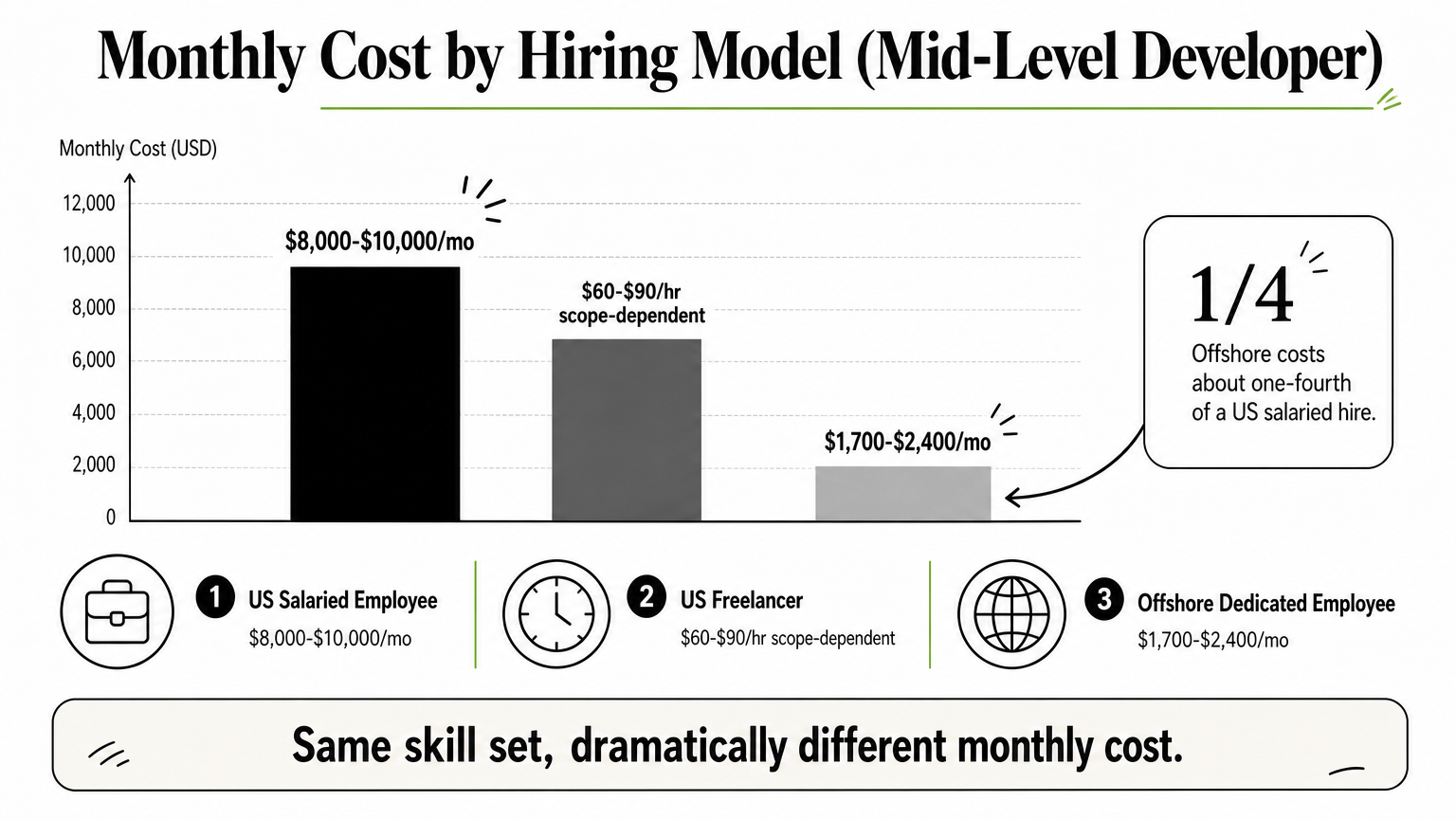
Salaried US employees come with the highest fixed cost once you add benefits, payroll taxes, and office overhead on top of base pay. Freelancers charge by the hour or project, which sounds flexible until you tally up scope creep and inconsistent availability. Offshore staffing with payroll and infrastructure handled for you, the model GlobalEmployees runs, gives you a full-time dedicated employee at a fraction of the US cost because you're not paying US cost-of-living wages, and the staffing partner absorbs HR, payroll, and infrastructure expenses instead of you.
| Hiring model | Junior | Mid-level | Senior |
|---|---|---|---|
| US salaried employee (annual) | $70,000-$90,000 | $95,000-$120,000 | $130,000-$160,000+ |
| US freelancer (hourly) | $35-$55/hr | $60-$90/hr | $95-$150+/hr |
| Offshore dedicated employee (monthly) | $1,090-$1,600 | $1,700-$2,400 | $2,500-$3,500 |
The gap between a US salaried hire and an offshore dedicated employee often runs into tens of thousands of dollars a year for the same output.
Once you convert those annual US salaries into monthly cost, the difference becomes even clearer. A mid-level US employee costs somewhere around $8,000-$10,000 a month once you factor in payroll taxes and benefits, while a comparable developer in India through a staffing partner starts around $1,090 a month with no separate HR or infrastructure bill. That's not a small discount, it's a different cost structure entirely.
What drives the price up or down
Several factors push rates higher regardless of hiring model. Specialized skills like DevOps, machine learning integration, or security-focused development add a premium, since fewer developers can do that work well. Location matters too, developers in major US tech hubs charge more than those in smaller markets, and this holds true offshore as well, where candidates in larger Indian tech cities sometimes command slightly higher rates than smaller regional markets. Urgency also plays a role, rushing a hire to fill an immediate gap usually means paying above-market rates because you're competing for whoever's available right now instead of whoever's the best fit.
Hidden costs people forget to budget for
Quoted salary or hourly rate rarely tells the whole story. Recruiting fees, background checks, laptop and software licenses, onboarding time, and management overhead all add real dollars that don't show up in a job posting. Offshore staffing models like GlobalEmployees fold most of these into the monthly rate already, since laptops, security compliance, and HR management come bundled in rather than billed separately. Businesses that skip this math often discover their "cheap" freelance hire actually cost more once they add up the hours spent managing scope changes and chasing deliverables.
Setting a realistic budget
Think in ranges, not fixed numbers, when you first budget for this hire. Decide upfront whether you need one generalist or a small team, since that changes your monthly total significantly. GlobalEmployees publishes transparent starting rates for full-stack developer hires so you can compare against local or freelance quotes before committing to any single path, which makes the next decision, choosing between in-house, freelance, or offshore, much easier to reason through with real numbers in hand.
Key skills and technologies to look for in candidates
A resume full of buzzwords tells you almost nothing about whether someone can actually ship working software. Before you start interviewing for a hiring full-stack developer role, get specific about which skills matter for your product stage, because the list looks different for a two-person startup than it does for a company running a payment platform. Below is a breakdown of what to actually check for, split by layer of the stack and by seniority, so you're not just nodding along at unfamiliar acronyms during an interview.
Front-end fundamentals that actually matter
Every candidate should know JavaScript cold, since it underpins nearly every modern front-end framework. Beyond that, look for real experience with whatever framework your product uses, React, Vue, or Angular, rather than a surface-level tutorial project listed on GitHub. Front-end skills worth confirming include responsive design, basic accessibility practices, and comfort working with a design handoff tool like Figma. A developer who can turn a static mockup into a working, responsive page without constant hand-holding saves you real time on every feature cycle.
Back-end and database skills
On the back end, ask candidates to walk you through how they'd design a simple API for a feature relevant to your product, not a generic whiteboard puzzle. Strong candidates should be comfortable with at least one server-side language, Node.js, Python, or PHP show up most often, and should understand how to structure a relational database like PostgreSQL or MySQL without over-normalizing every table into uselessness. Database design mistakes are expensive to fix later, so this is worth testing directly rather than taking on faith.
The clearest sign of real full-stack skill is a developer who can explain a technical tradeoff in plain language, not just recite a framework name.
DevOps, cloud, and deployment knowledge
Not every full-stack developer needs deep DevOps expertise, but every candidate should know enough to deploy their own code without waiting on someone else. That means basic familiarity with Git, a cloud provider like AWS or Azure, and containerization tools like Docker if your stack uses them. Senior candidates should go further, understanding CI/CD pipelines and basic security practices well enough to catch obvious vulnerabilities before code reaches production.
| Skill area | Junior expectation | Mid-level expectation | Senior expectation |
|---|---|---|---|
| Front-end framework | Can build components from a spec | Can architect a feature independently | Can mentor others and set patterns |
| Back-end/API design | Follows existing patterns | Designs new endpoints confidently | Owns system architecture decisions |
| Database work | Writes basic queries | Designs schemas, optimizes queries | Handles scaling and performance tuning |
| DevOps/cloud | Deploys with guidance | Manages CI/CD pipelines | Owns infrastructure decisions |
| Communication | Asks clarifying questions | Documents decisions clearly | Translates business needs into technical plans |
Soft skills that separate good hires from great ones
Technical ability gets a candidate through the door, but communication determines whether they're pleasant to actually work with day to day. Look for developers who ask clarifying questions before diving into a task instead of guessing at requirements, and who can explain a technical decision to a non-technical stakeholder without drowning them in jargon. This matters even more if you're hiring remotely or offshore, since async communication over Slack or email exposes weak communicators fast. GlobalEmployees screens for this specifically during its vetting process, which is one reason clients report fewer miscommunications than they experienced with freelance hires picked off a marketplace listing.
Once you know which skills actually matter for your product, the next decision is where to find someone who has them, in-house, freelance, or through an offshore staffing partner, and each path comes with tradeoffs worth understanding before you commit budget to one over the others.
In-house, freelance, or offshore: comparing hiring models
Every business eventually faces the same three-way choice when it comes to hiring full-stack developer talent: hire someone locally as a full-time employee, bring on a freelancer for a defined project, or partner with an offshore staffing company for a dedicated full-time hire. Each path solves a different problem, and picking the wrong one is how companies end up either overpaying for flexibility they don't need or under-resourcing a project that needed steady, full-time attention.
In-house hiring: control at a premium
Bringing a developer on as a local, in-house employee gives you the tightest control over culture, communication, and day-to-day collaboration. You get someone in the same time zone, available for spontaneous meetings, and fully embedded in your team's rhythm. That control comes at a cost though: US salaries, benefits, payroll taxes, and office overhead push the total cost of an in-house hire next to a remote dedicated team well above what the base salary number suggests. Local hiring also takes longer, since you're competing with every other company chasing the same shrinking pool of qualified candidates in your city.
Freelance hiring: fast but inconsistent
Freelancers solve short-term problems well. If you need a specific feature built in a defined sprint, or you're testing an idea before committing to a full hire, freelance platforms get you moving fast. The tradeoff shows up in consistency: freelancers juggle multiple clients, availability shifts week to week, and vetting quality varies wildly across marketplace listings, which is how freelancers stack up against a dedicated remote developer in practice. You also absorb the management overhead yourself, since nobody's screening candidates or handling scope disputes on your behalf.
Freelance hiring trades long-term reliability for short-term speed, and that tradeoff only makes sense for narrowly scoped work.
Offshore staffing: full-time commitment at lower cost
Offshore staffing sits between the two. You get a dedicated employee, not a freelancer juggling five other clients, working full-time on your product alone. GlobalEmployees runs this model specifically: candidates are pre-vetted, HR and payroll are handled on your behalf, and infrastructure like laptops and secure VPN access comes bundled into the monthly rate for hiring a full-stack developer. Because you're not paying US cost-of-living wages or absorbing separate HR overhead, the monthly cost lands far below an equivalent in-house or freelance arrangement, without sacrificing the full-time commitment that freelance work can't guarantee.
Comparing the three models side by side
| Factor | In-house | Freelance | Offshore (GlobalEmployees model) |
|---|---|---|---|
| Commitment level | Full-time, employed | Project-based, part-time attention | Full-time, dedicated |
| Time to hire | Weeks to months | Days to weeks | Days, pre-vetted pool |
| Cost structure | Salary + benefits + overhead | Hourly, scope-dependent | Flat monthly, all-inclusive |
| Vetting quality | Depends on your process | Inconsistent, self-managed | Pre-vetted before you interview |
| Contract flexibility | Low, hard to scale down | High, but unreliable | High, no long-term contract |
| Best fit | Culture-critical, senior roles | Short, defined projects | Ongoing product work, cost-sensitive teams |
Matching the model to your actual need
Companies rarely need only one of these models forever, and a side-by-side look at staffing, freelance, and agency models shows why. A common pattern that works well: keep one or two in-house employees for culture-critical, senior decision-making roles, use freelancers for narrow one-off projects, and build the bulk of your development team through an offshore staffing partner where cost and full-time reliability matter more than physical proximity. Choosing correctly here saves you from the two most common mistakes covered next, hiring the wrong model for the job and skipping the vetting steps that catch weak candidates before they cost you real time and money.
Interview questions that reveal real full-stack skill
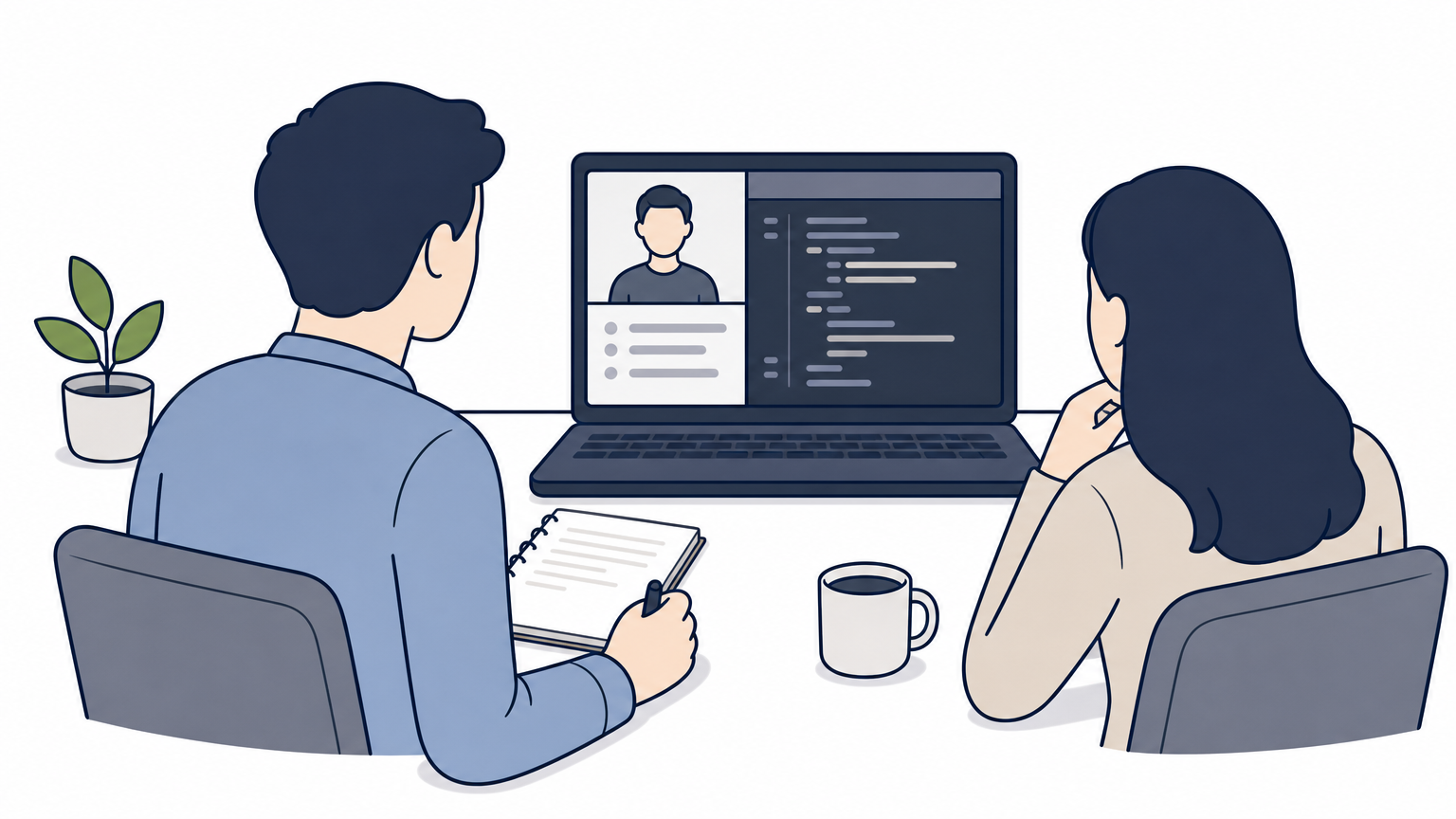
Most interviews for a hiring full-stack developer search fail because they test memorization instead of judgment. Anyone can recite what REST stands for or list the lifecycle methods in React. What separates a strong hire from a weak one is how they reason through a problem when the answer isn't obvious. The questions below are built to expose that reasoning instead of rewarding whoever studied the most flashcards before the call.
Questions that expose front-end depth
Ask a candidate to walk you through how they'd debug a page that renders correctly on desktop but breaks on mobile. A junior developer might guess at CSS fixes. A mid-level or senior developer will talk through checking the viewport meta tag, inspecting breakpoints, and testing on an actual device rather than just resizing a browser window. Other useful prompts include:
- "How would you optimize a page that loads slowly because of a large image gallery?"
- "Walk me through how you'd structure state in a form with ten interdependent fields."
- "What's the tradeoff between server-side rendering and client-side rendering for this type of app?"
None of these have a single right answer. You're listening for structured reasoning, not a rehearsed definition.
Questions that expose back-end and architecture thinking
Back-end questions should center on tradeoffs, since real product work is full of them. Ask how they'd design a database schema for a feature specific to your product, then push back with a constraint, like needing to support ten times the current user load. Strong candidates adjust their answer instead of defending their first idea at all costs. A useful follow-up: "Tell me about a time your first database design didn't hold up, and what you changed." Architecture questions like this reveal whether someone has actually shipped and maintained software, not just built a class project.
A candidate who defends a bad decision under pushback is a bigger red flag than one who admits they'd need to look something up.
For a technical screen, a short take-home task beats a whiteboard puzzle almost every time. Something like the snippet below works well as a starting brief:
Task: Build a small API endpoint that accepts a list of orders and returns
the top 3 customers by total spend. Include basic error handling and
one unit test. Time budget: 90 minutes.
This kind of task mirrors real work, and how a candidate handles the time constraint tells you almost as much as the code itself.
Behavioral questions that predict real-world performance
Skip generic behavioral questions like "tell me about your greatest weakness." Instead, ask about a specific situation: "Describe a time you disagreed with a product manager about a technical approach. What happened?" You're listening for whether they compromise reasonably or dig in without explanation. If you're hiring remotely or offshore, add a question about how they handle unclear requirements over async communication, since that's where weak communicators struggle most and where communication skills matter as much as code quality.
Running the interview efficiently
Keep the whole process to two rounds when possible: one technical screen, one deeper conversation covering architecture and behavior, and lean on a checklist for interviewing developers remotely to keep both focused. Longer processes lose good candidates to competing offers, especially in a tight local market like Charlotte. Services that pre-vet candidates before you ever see a resume, which is how GlobalEmployees structures its process, let you skip most of the screening round entirely and spend your interview time on fit instead of filtering out unqualified applicants.
Common mistakes that derail the hiring process
Even experienced hiring managers repeat the same errors when hiring full-stack developer talent, and most of these mistakes are avoidable once you know what to watch for. Below are the patterns that show up most often, whether you're hiring locally in Charlotte, posting on a freelance marketplace, or working with an offshore staffing partner for the first time.
Writing a job post that attracts everyone and filters no one
Many companies copy a generic job description from a template site and wonder why they get three hundred applicants and no strong matches. A vague post with no specific tech stack, no seniority level, and no salary range signals that you haven't thought through the role, and serious candidates skip it in favor of listings that show real specificity. Vague job postings waste your time and the candidate's, since half the applicants won't match what your product actually needs.
Skipping technical validation because the resume looks good
A polished resume with the right buzzwords tells you nothing about whether someone can actually build software under real constraints. Hiring managers who skip a technical screen and go straight to a culture-fit conversation often discover the gap only after the new hire struggles with their first real ticket. Technical validation doesn't need to be elaborate, a focused 90-minute task or a short paired coding session catches most mismatches before you've invested weeks in a bad fit.
Skipping the technical screen to save an hour upfront usually costs you weeks of rework later.
Ignoring time zone and communication realities
Some companies hire remotely or offshore without ever discussing how communication will actually work day to day. Overlap hours, response-time expectations, and preferred tools should be settled before the first day, not discovered through frustration in week three. Teams that skip this step often blame the hiring model itself when the real problem was a lack of upfront planning around communication realities.
Underestimating the true cost of a bad hire
Quoted salary or hourly rate rarely reflects what a hire actually costs once you add recruiting time, onboarding, management overhead, and the cost of redoing work that didn't meet expectations. Replacing a bad hire six months in costs far more than the extra week it would have taken to vet properly upfront. Underestimating true cost is one reason so many businesses eventually look at staffing partners like GlobalEmployees, since a money-back guarantee or quick replacement removes most of the financial risk from a mismatch.
A quick checklist to avoid the common traps
- Write a job post specific enough to filter out mismatched applicants
- Run a real technical screen before scheduling a full interview
- Settle communication expectations before the first day of work
- Budget for onboarding and management time, not just salary
- Confirm what happens if the hire doesn't work out before you sign anything
Vetting these details upfront takes discipline, especially when you're eager to fill an open seat. But rushing any one of these steps is how a promising hire turns into a costly restart three months later, and it's exactly the risk a structured, pre-vetted hiring process is designed to remove.
Choosing the right path for your next hire
Hiring full-stack developer talent isn't complicated once you strip away the buzzwords and vague job posts. Define your stack clearly, budget for the real cost of each hiring model, and test for judgment instead of memorized answers during interviews. Whether you go local, freelance, or offshore, the fundamentals stay the same: know what you need, vet before you commit, and settle communication expectations early.
Most businesses that get stuck here aren't lacking good candidates, they're skipping the screening steps that separate a strong hire from a costly restart. Matching the model to your stage of growth, rather than defaulting to whatever's familiar, saves you real money and months of rework.
If you'd rather skip the guesswork, hire a pre-vetted full-stack developer through a process that's already handled the sourcing, vetting, and paperwork for you.